

ASO technology
Antisense oligonucleotide (ASO) therapy, often simply referred to as antisense therapy, is a precision medicine approach particularly well suited to targeting specific disease-causing genetic variants. Read below to learn more.
What are DNA, genes, RNA, and proteins, and how are they connected?

DNA
DNA is the body’s instruction manual. It is found in every cell and contains all the information needed to build and maintain the body.

Genes
A gene is a small section of DNA that contains specific instructions. Each gene tells the body how to make a particular protein.

RNA
RNA is a copy of a gene that carries the instructions from DNA needed to make a specific protein. These instructions are referred to as the “RNA message.”
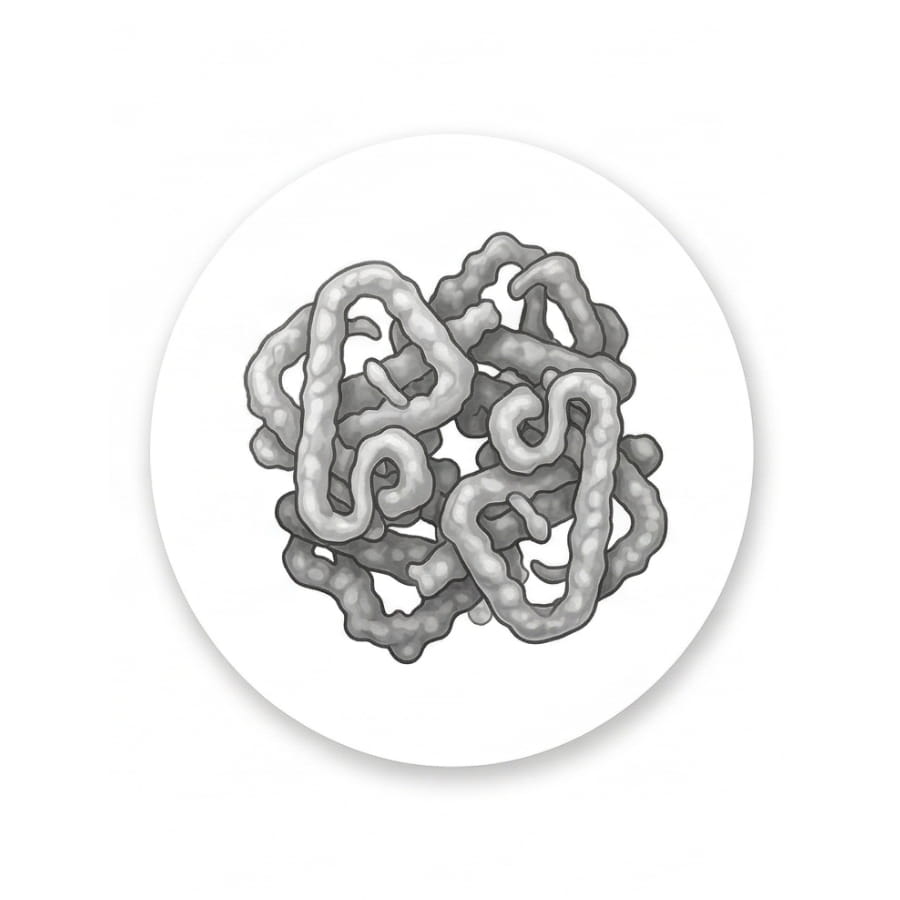
Proteins
Proteins are the main working components of the body. They build tissues, send signals, and carry out most of the body’s functions.
How it works
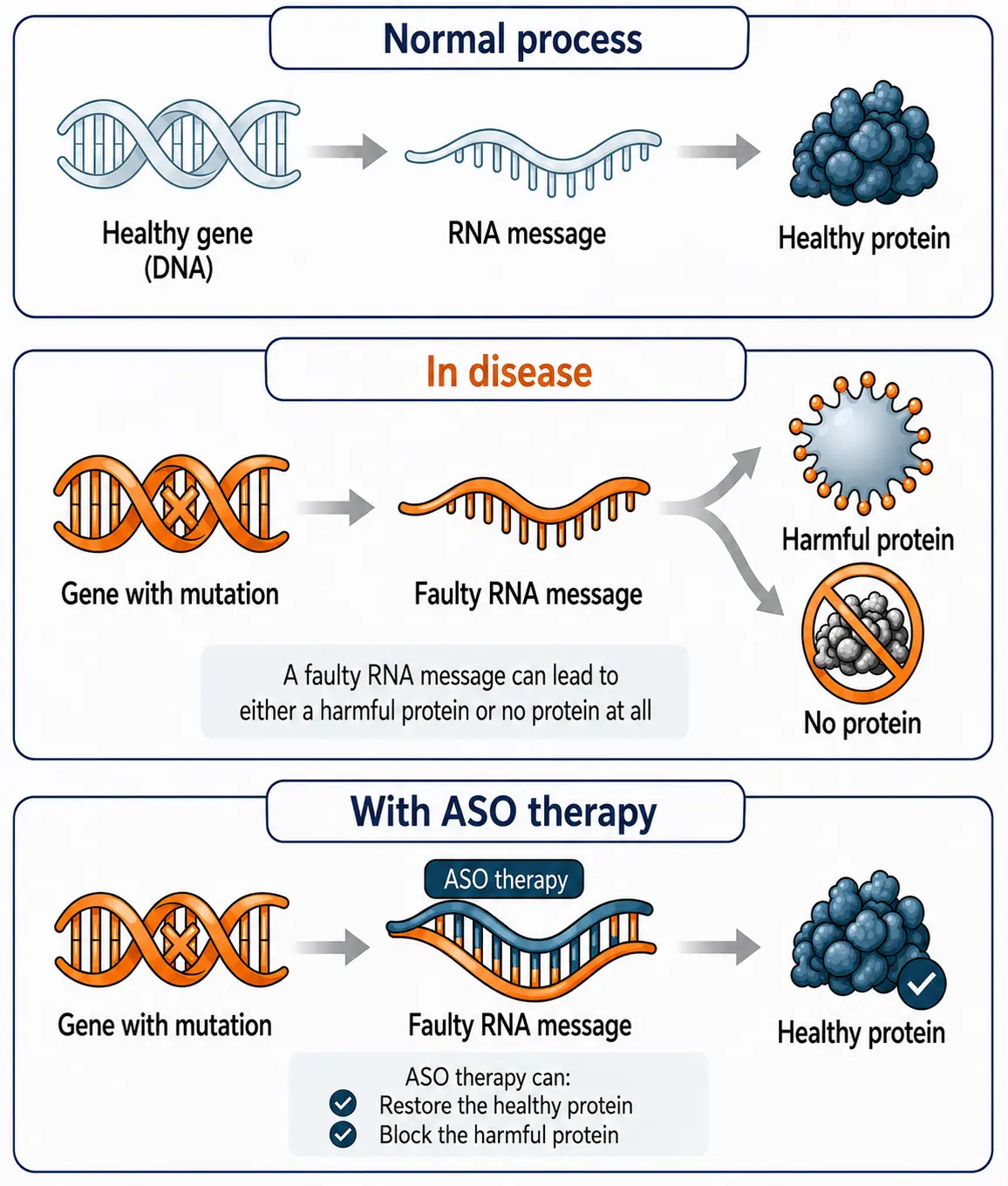
DNA contains genes. Genes are copied into RNA. RNA carries a message to the cell’s protein production machinery, instructing it which protein to make. This is how the body turns genetic information into function.
What happens in a genetic disease?
In some cases, there is a change in the DNA. This can change the instruction carried by the RNA message, and as a result, the protein produced from that message either does not function properly or is not made at all. Because proteins are essential for the body to function, a faulty protein can lead to disease.
What happens when an ASO molecule binds?
When an ASO molecule binds to a faulty RNA message, it can:
- Correct the RNA message so the protein production machinery can produce a functional protein
- Block the faulty RNA message so it does not reach the protein production machinery, preventing the production of a harmful protein
The development of new ASO therapies follows a structured and very predictable path, built on decades of scientific and clinical experience across multiple approved therapies. This enables ASO therapies to be developed relatively quickly, making them particularly well-suited for diseases that progress rapidly, where time to therapy is critical.
In many cases, patients with ultra-rare diseases have a unique change in their DNA, and therefore in their RNA message. Because ASO therapies can be tailored to a specific RNA message, and thereby to the underlying genetic change, they are particularly well-suited as therapies for these patients.
ASO therapies are not suitable for every ultra-rare disease, and careful testing is always required to ensure safety and effectiveness. However, when the underlying biology is addressable, ASO therapy offers a promising path toward a therapy that targets the root genetic cause of disease.